How to Coordinate a Parent's Care With Your Whole Family
A practical, calm guide to sharing caregiving with siblings and family: tracking medications and appointments, organizing important documents, preparing for doctor visits, and keeping everyone on the same page.
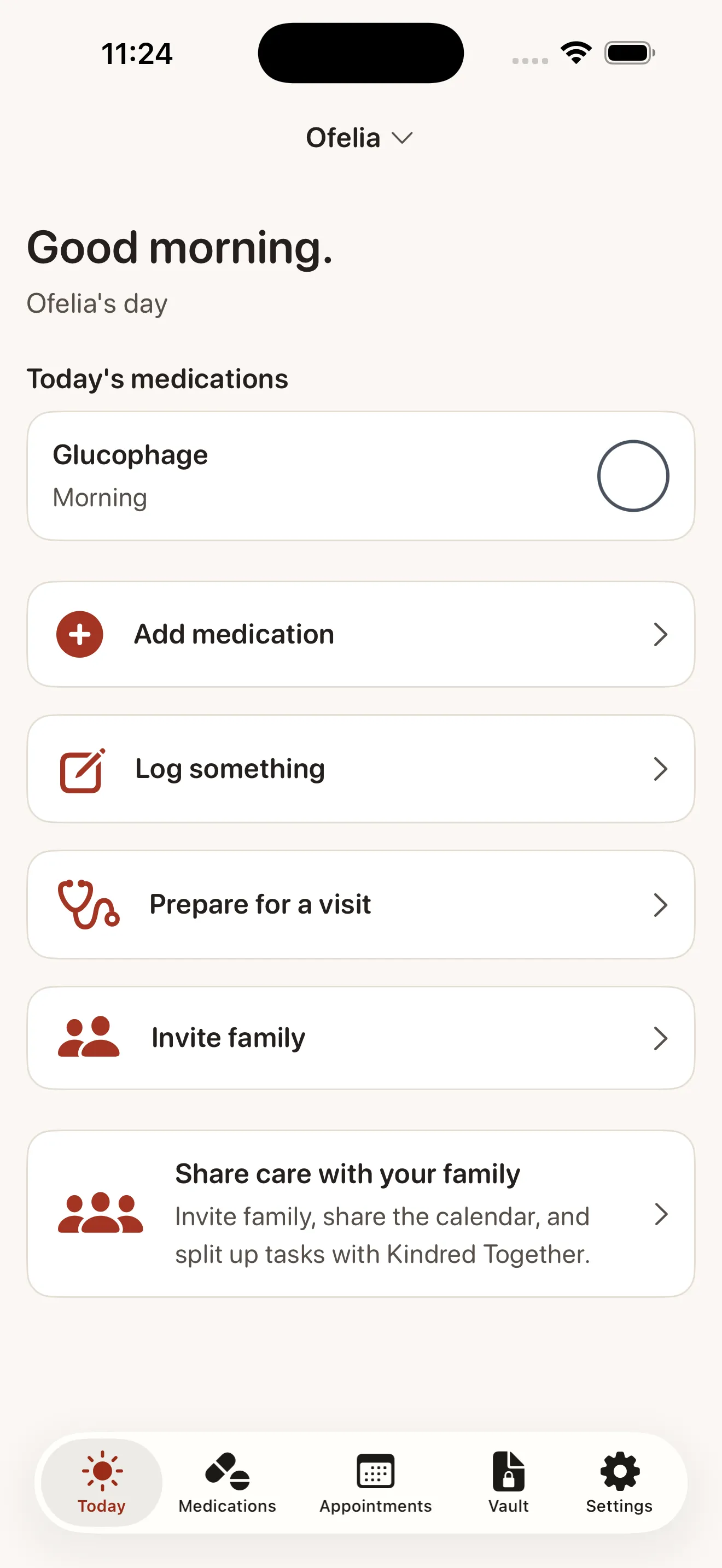
Why caregiving falls apart over text threads
When several people help care for a parent, the coordination usually happens in scattered group texts, sticky notes, and memory — and one person ends up carrying most of it. The result is the all-too-common question: "Did anyone give Mom her pills?"
A shared care organizer fixes this by giving everyone the same up-to-date picture: what medications are due, which appointments are coming, and what has already been handled — and by whom.
What to organize first
Start with the things that cause the most daily stress: medications (with simple morning, noon, evening, and bedtime reminders and refill tracking) and appointments (with reminders the day before and the morning of, and a clear note of who is taking them).
Then build a document vault for the papers families scramble to find in a crisis — insurance cards, IDs, advance directives, and key contacts. Store where to find things, not passwords or account numbers, and keep a dedicated password manager for credentials.
Getting more from every doctor visit
Before an appointment, jot down questions and any new symptoms, then bring a clean summary of current medications, conditions, and recent notes. Many families say this single habit is the difference between a rushed, confusing visit and one where they finally feel heard.
See the Kindred product page for screenshots, pricing, and the full privacy policy. Kindred is free for one organizer, with an optional upgrade to share the care with your whole family.