
Open a typical home cook's phone and you'll find a graveyard of half-used apps: one for saving recipes, one for grocery lists, one for meal planning, maybe a timer app propped against the backsplash. Each does its job fine. None of them talk to each other. MiseMate was built on a simple, almost stubborn premise — that cooking is one continuous act, from the moment you spot a recipe to the moment you plate it, and the software should behave that way too.
The problem: five apps for one dinner
Think about what actually happens between deciding what to eat and eating it. You find a recipe somewhere — a screenshot, a saved link, a cookbook photo. You figure out how many people it needs to feed and do rough math in your head. You write a list, or try to remember it at the store. You decide which night it fits into. Then, standing at the stove, you're flipping back to the original source to check a step you half-remember. That's five distinct hand-offs, and every hand-off is a place where a detail gets lost — the substitution you meant to make, the quantity you meant to double, the timer you meant to set.
MiseMate starts from the idea that each of those hand-offs is a design failure waiting to happen. So instead of shipping a recipe box, or a grocery list, or a planner, it ships the connective tissue between all of them.
Import once, adapt everywhere
The flow starts before you've committed to anything. MiseMate lets you pull a recipe in from a URL or a photo — a magazine page, a handwritten card, a friend's text message screenshot — and turns it into a structured recipe the app can actually work with: ingredients it can scale, steps it can time, a dish it can plan into your week. Pair that with 276 built-in recipes across more than 30 cuisines and a searchable library of two million more, complete with nutrition data, and the starting point stops mattering. What matters is that once something is in MiseMate, it behaves the same way as everything else in MiseMate.
Scaling that respects your judgment
Doubling a recipe sounds like simple arithmetic until you hit the ingredient that doesn't scale linearly — the pinch of cayenne that shouldn't become a full teaspoon, the baking soda that behaves differently at twice the volume. Smart ingredient scaling in MiseMate adjusts quantities across an entire recipe at once, but the deeper design choice is what it doesn't do: it doesn't pretend cooking is pure math. It gets you 90% of the way there instantly, so the only thinking left for you is the kind that actually needs a human — taste, texture, judgment.

The best kitchen software doesn't try to replace your judgment. It clears away the arithmetic so your judgment has somewhere to land.
The list that already knows what's in your pantry
A grocery list generated from a single recipe is a convenience. A grocery list generated from a week of planned meals, with duplicate ingredients merged and quantities combined, is a different category of useful. This is where the flow philosophy pays off most visibly: because MiseMate already knows what you're cooking and how much of it you're making, the smart grocery list isn't a separate feature you fill in by hand — it's a byproduct of decisions you've already made. Building your week in the meal planning calendar and watching the list assemble itself is, for a lot of users, the moment the app stops feeling like software and starts feeling like a system.
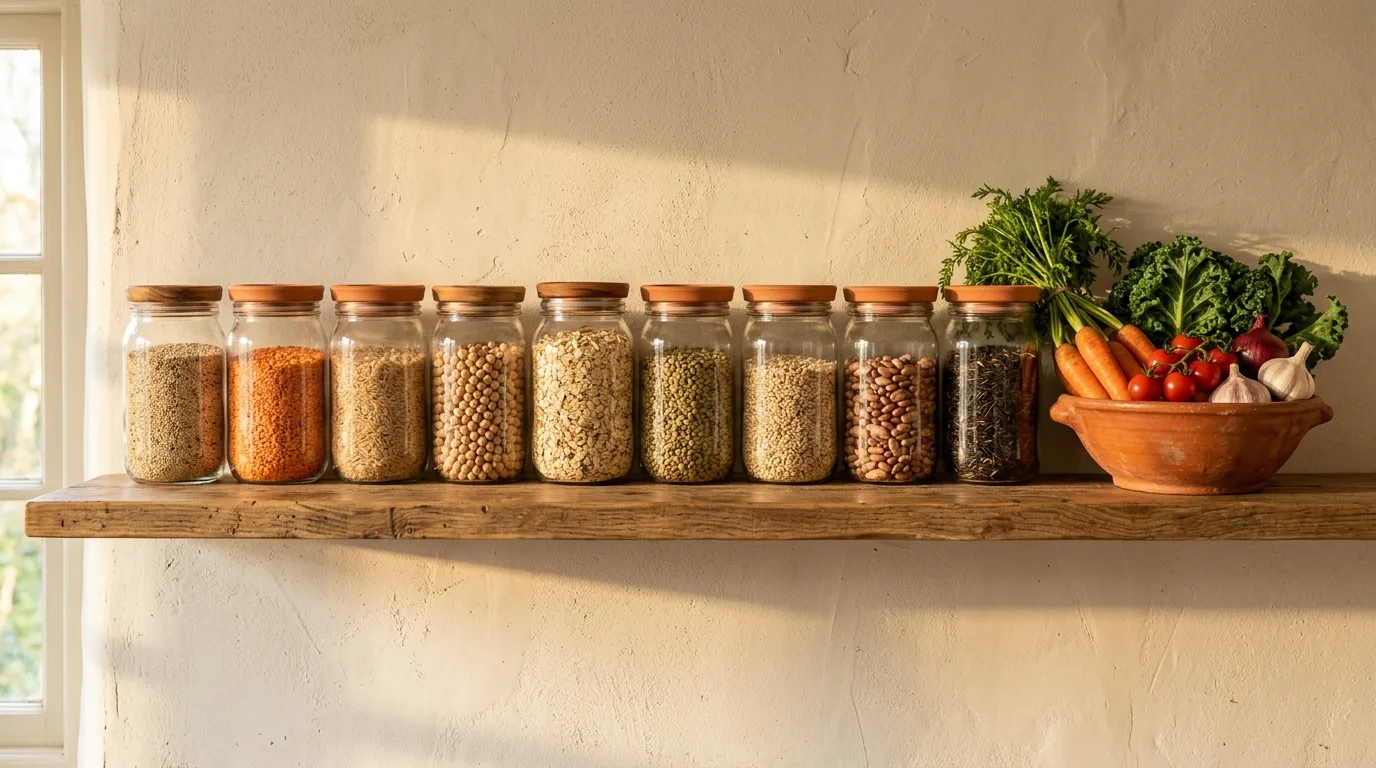
If you want to see what a full week looks like in practice, one parent's account of turning Sunday-night panic into a planned week walks through exactly this hand-off, from empty calendar to finished list.
Cook Mode: an assistant that stays in the room
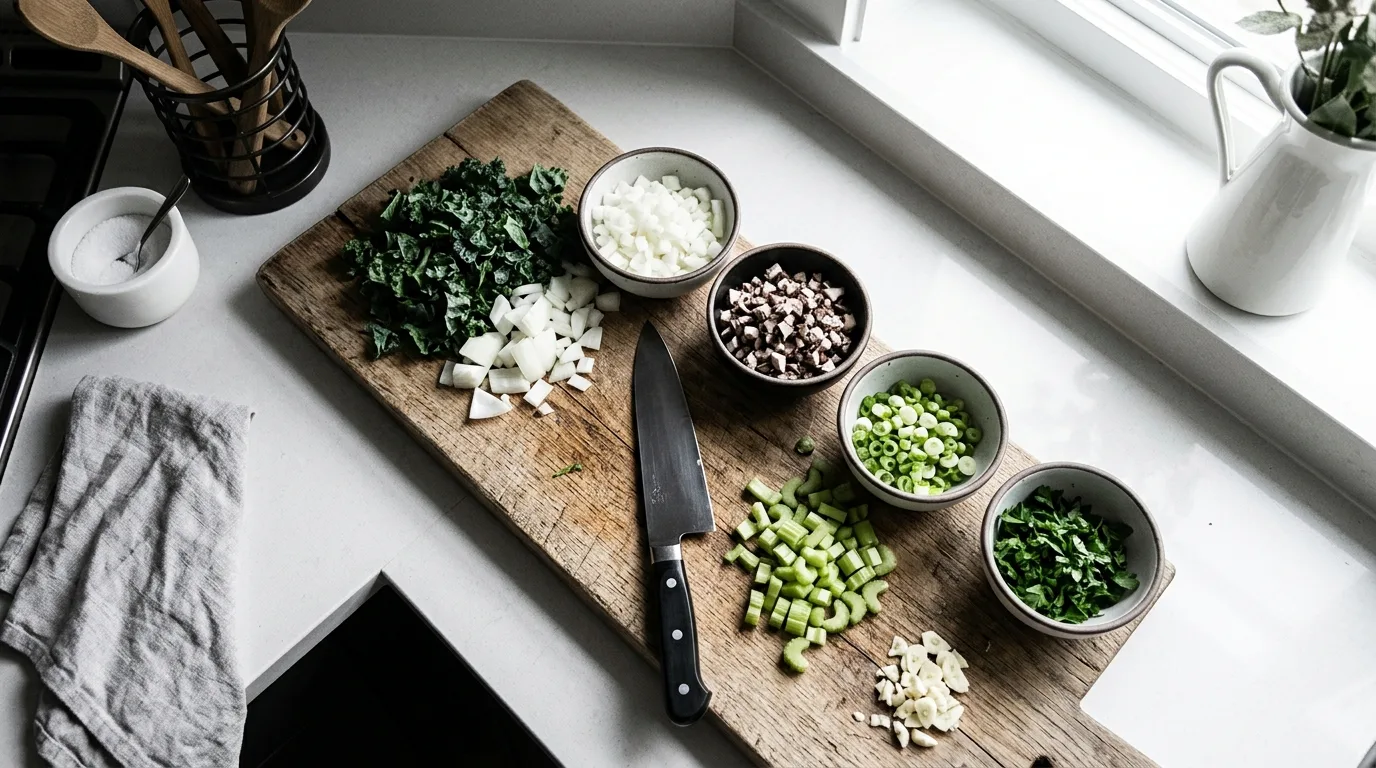
Everything up to this point is preparation. Cook Mode is where the flow has to survive contact with a hot stove, wet hands, and a phone you don't want to touch. Step-by-step instructions with built-in timers keep the recipe legible at arm's length, but the more interesting piece is the AI kitchen assistant underneath it, powered by Claude. It can suggest a recipe from whatever's already in your pantry, recommend a substitution when you're out of an ingredient mid-recipe, rewrite a dish for a different diet on request, and answer the kind of question you'd otherwise pause and Google — what does 'fold' actually mean, is this pan hot enough, why did my sauce split. It's not a chatbot bolted onto a recipe app; it's the same assistant that helped you plan the week, now standing next to you at the counter.
- Suggests recipes based on what's already in your pantry
- Recommends substitutions when you're missing an ingredient
- Rewrites recipes for different diets on request
- Coaches you through unfamiliar techniques step by step
What free vs premium actually protects
The way MiseMate splits free and paid features tells you a lot about which parts of the flow it considers essential. Recipe browsing, ingredient scaling, grocery lists, and Cook Mode are free — the core loop of finding something to cook and getting it onto a plate costs nothing. Premium is reserved for the layer that compounds over time: the AI assistant and the meal planning calendar, the tools that get more valuable the longer you use them and the more of your week they touch. That's a deliberate bet that the flow itself, not any single locked feature, is what earns a subscription.
Is MiseMate a recipe app, a grocery list app, or a meal planner
For a closer look at how that compares to using separate single-purpose apps, this breakdown of recipe apps, meal planners, and all-in-one kitchen tools is worth reading. And if you're deciding whether the flow actually holds up in daily use, the full MiseMate review covers that in more detail.
Common questions
Do I need premium to use MiseMate's core features
Can MiseMate import a recipe from a photo
What makes MiseMate different from a basic recipe box app
If you're setting up MiseMate for the first time, this walkthrough from first open to first meal covers the setup end of the flow, and this guide to what to look for in a recipe and meal prep app is useful if you're still comparing options.
This article was drafted with AI assistance and reviewed by a human editor before publishing.