
Most party games demand equipment, setup, or an internet connection. Blend In! demands none of those things. What it does demand is your willingness to suspect everyone in the room. One phone gets passed around your group. Everyone sees the same word—except one person, who sees something else entirely. That's where the game lives: in the gap between what you know and what they know, and in your ability to read their lies.
The Setup: Dead Simple, Devilishly Effective
When you start a game of Blend In!, the first step is names. You add 3 to 10 players—however many humans are actually in the room. The app doesn't care who they are beyond that. No accounts. No profiles. No friction. Pick your word category (Food & Drinks, Movies & TV, Countries & Cities, Animals, or Sports) and the game assigns a secret role to each player.

Nine players get the real word. One player—the imposter—gets something close but distinctly different. A real word might be "pizza." The imposter sees "sandwich." Not so different that they can't bluff. Different enough that they'll slip up if they're not careful.
The Role Reveal: Your Secret, Kept Safe
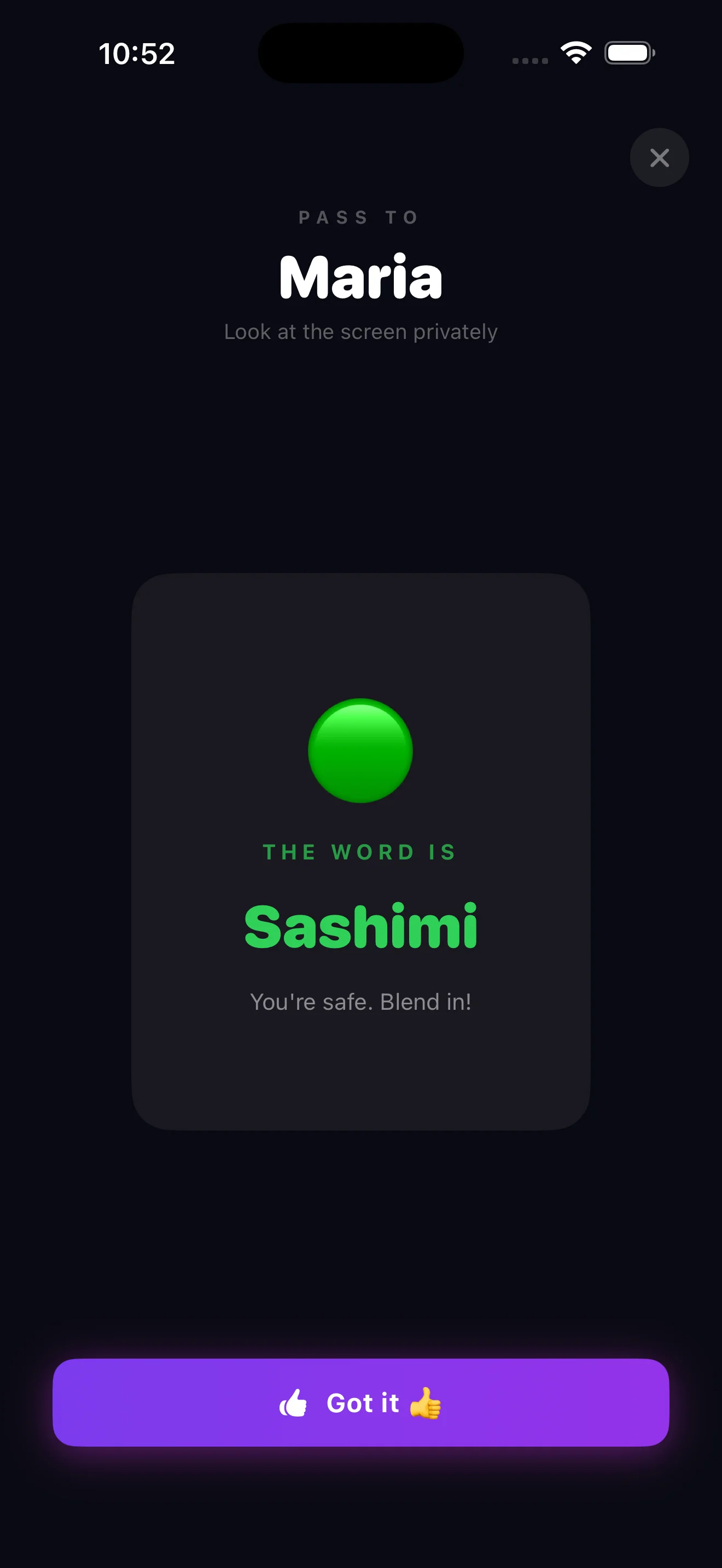
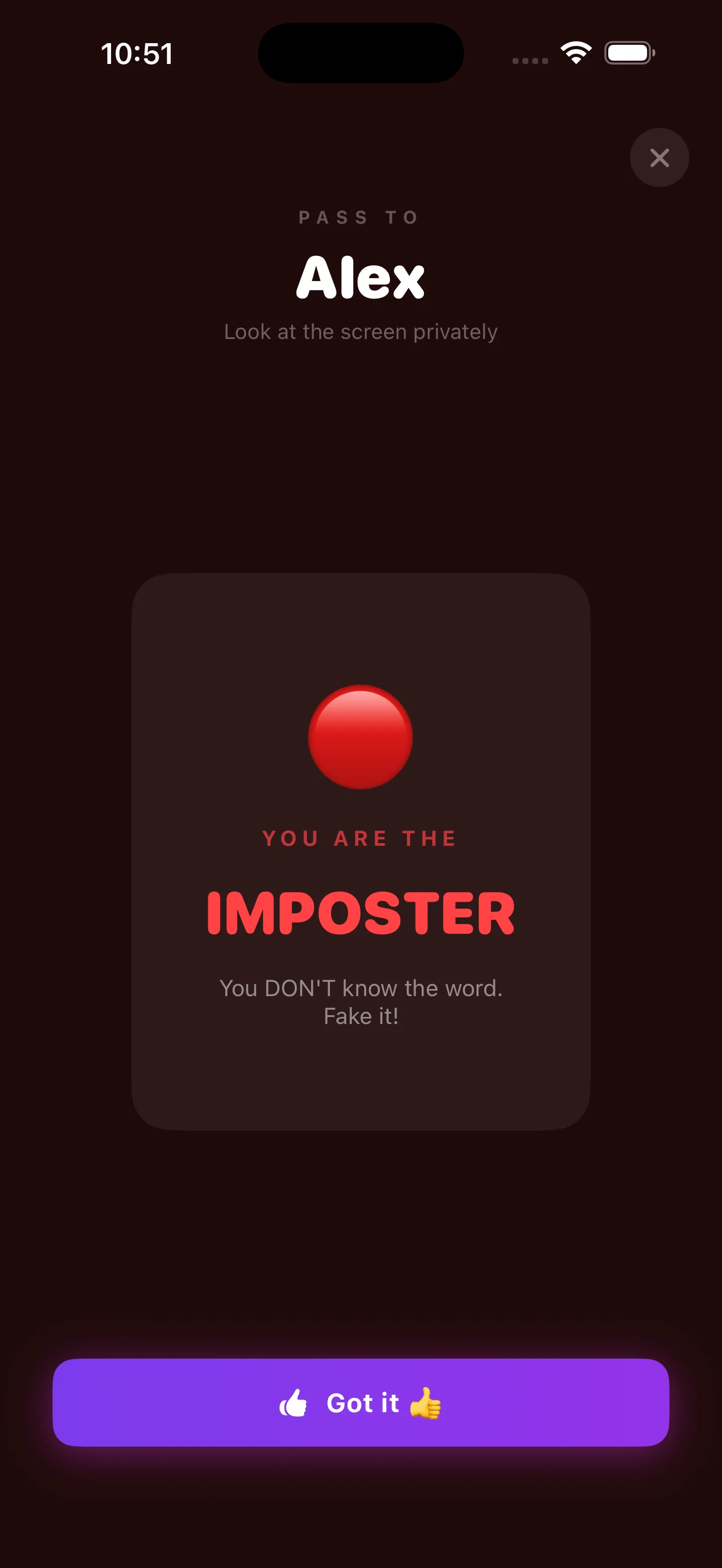
Each player takes the phone one at a time. You see your role on screen—either you're safe, or you're the imposter. The visual design here matters. When you're safe, there's relief in the clarity. When you're the imposter, there's a jolt of adrenaline and immediate pressure to memorize a plausible lie.
The Clue Round: Where Lies Get Born
Once everyone knows their role, the actual game begins. Players take turns giving one-word clues about the word. The timer counts down. The safe players are trying to signal to each other without giving the word away entirely. The imposter is listening, learning, and trying to blend in by giving clues that sound plausible but aren't quite right. It's a verbal high-wire walk. One word too specific and the safe players lock onto you. One word too vague and you look suspicious.

The imposter's best defense isn't a perfect lie. It's hiding in the noise of everyone else's truth.
Discussion & Voting: Where Suspicion Peaks
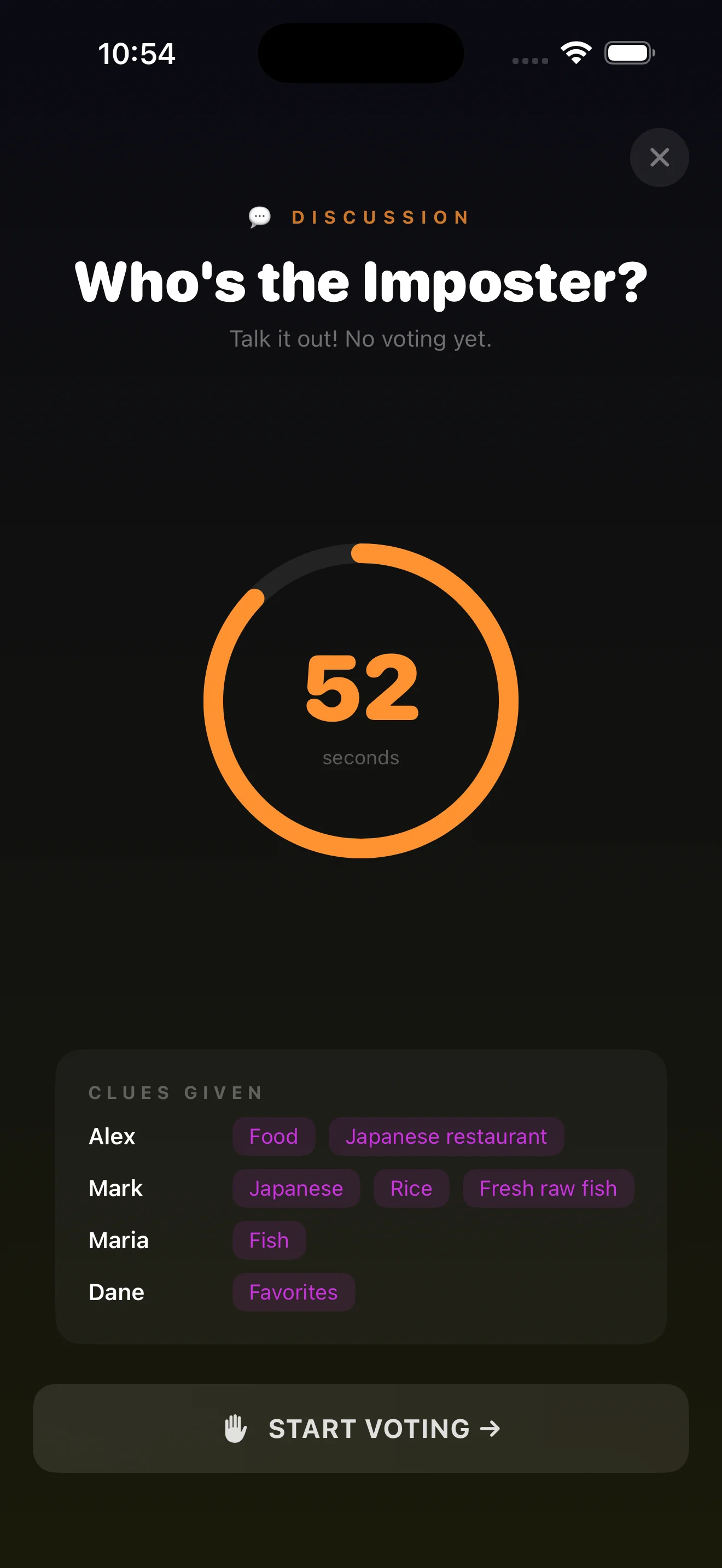
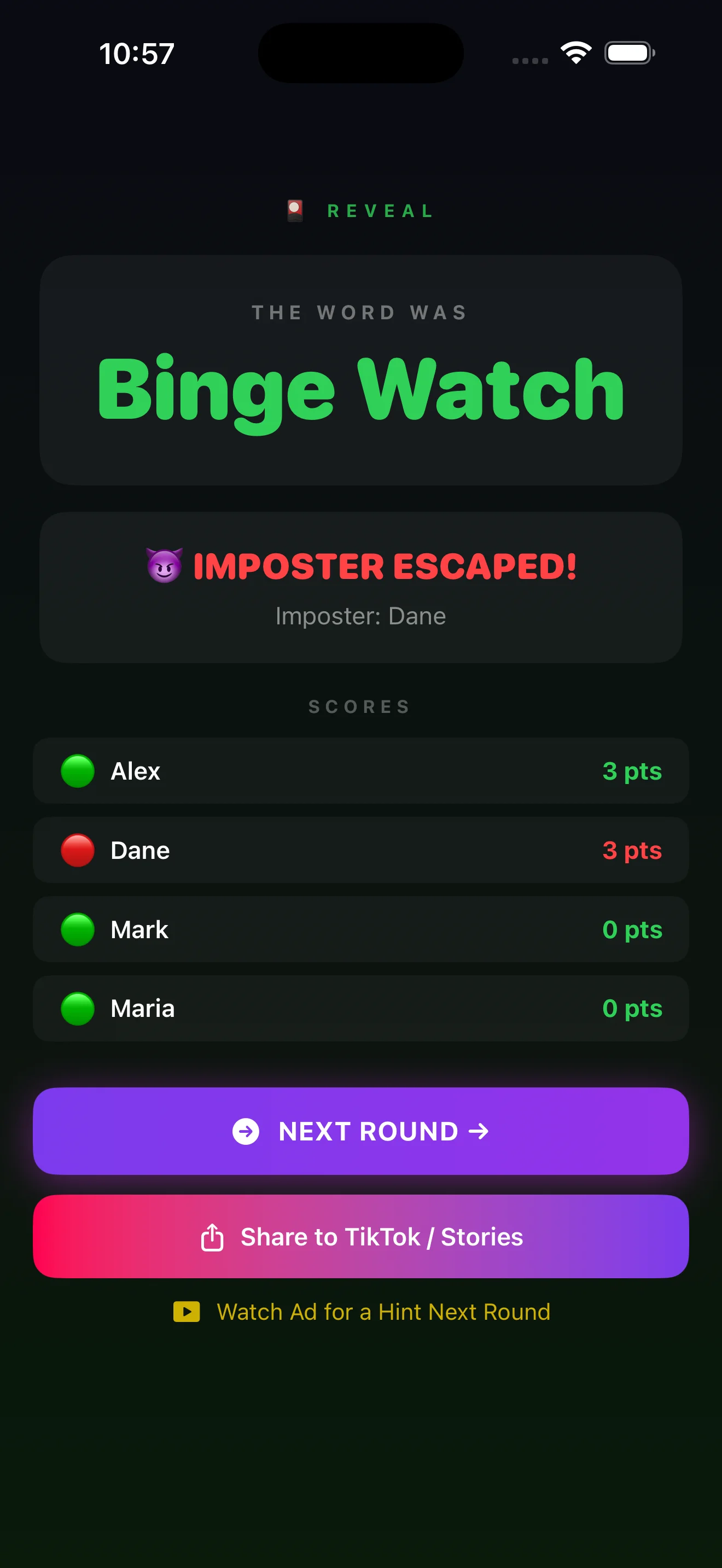
After all the clues are given, the group discusses. Who sounded off? Whose clue didn't quite land? You're all now detectives, picking apart each other's word choices. The imposter is in that discussion too, defending themselves while gathering evidence about what the real word actually is. Then you vote. Majority rules. If the imposter gets voted out, safe players win. If the imposter survives, they win.

Why One Phone Changes Everything
The decision to use a single shared device isn't a limitation—it's the entire design philosophy. When everyone passes the same phone, there's no hiding. You can't check the game on your lap. You can't sneak a peek at someone else's role. The phone becomes a sacred object, handed from person to person, each reveal a moment of truth. No accounts mean no tracking. No Wi-Fi required means you can play in a car, a cabin, or anywhere else your group gathers. The game strips away every possible distraction and leaves only social deduction: watching faces, listening to voices, reading the tiny tells that reveal who's lying. For more on the game's design choices, explore how Blend In! turns one phone into party chaos.
The game ships with five free word pack categories (Food & Drinks, Movies & TV, Countries & Cities, Animals, and Sports)—each with 100+ words ready to go. The Chaos Modes add rule variations that twist the formula in unexpected ways. But the core loop never changes: pass the phone, give a clue, suspect someone, vote them out. Repeat until someone wins. If you're looking to level up your strategy, check out tips for spotting fakers and winning.
This article was drafted with AI assistance and reviewed by a human editor before publishing.