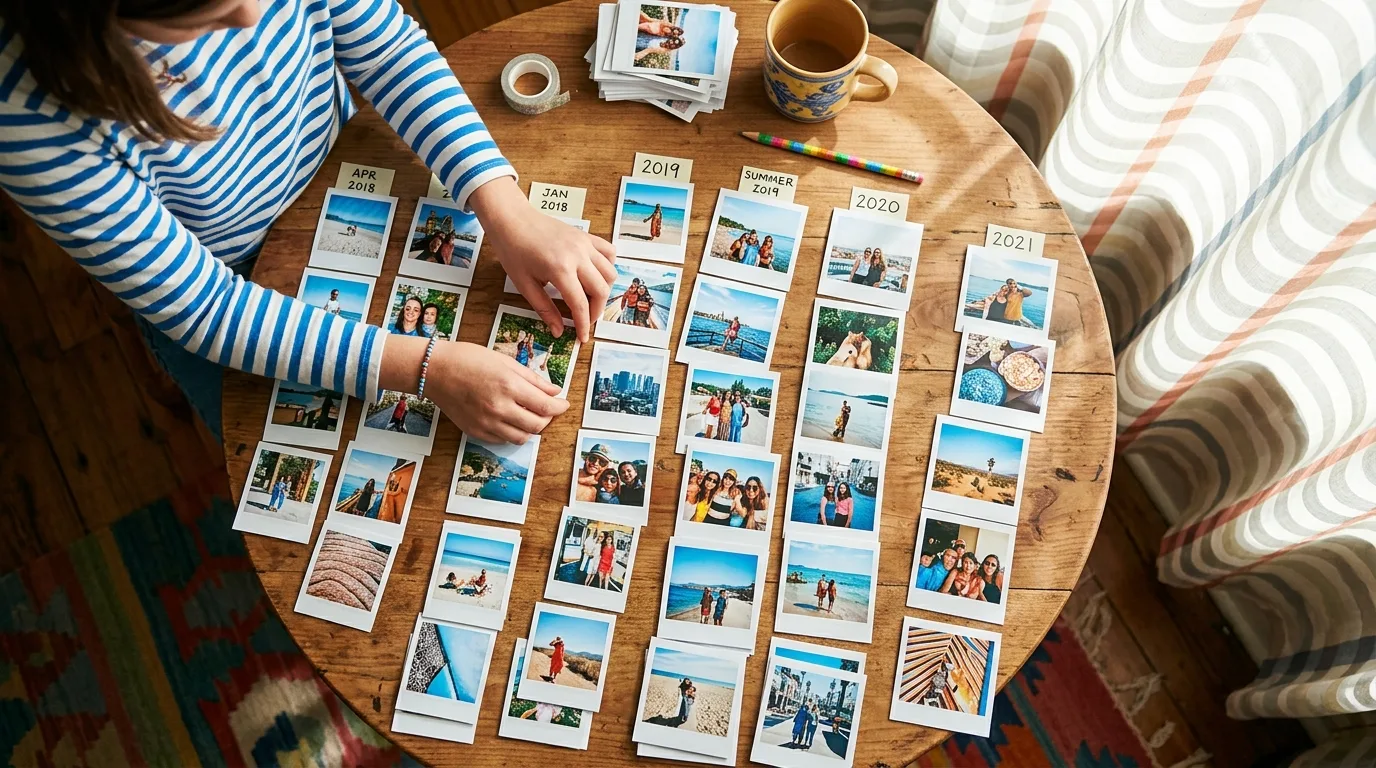
Somewhere on your phone is proof of a real relationship: the photo from the airport the day you finally met in person, the year of messages while a visa was pending, the engagement weekend, the holidays with each other's families. None of it is in order. None of it is labelled. And an immigration officer reading a filing has no reason to piece it together for you. Bona Fide doesn't ask you to recreate that proof — it reads the dates and places already sitting inside the photos and chats you already have, and lays them out as a document someone else can actually follow.
A camera roll is not an argument
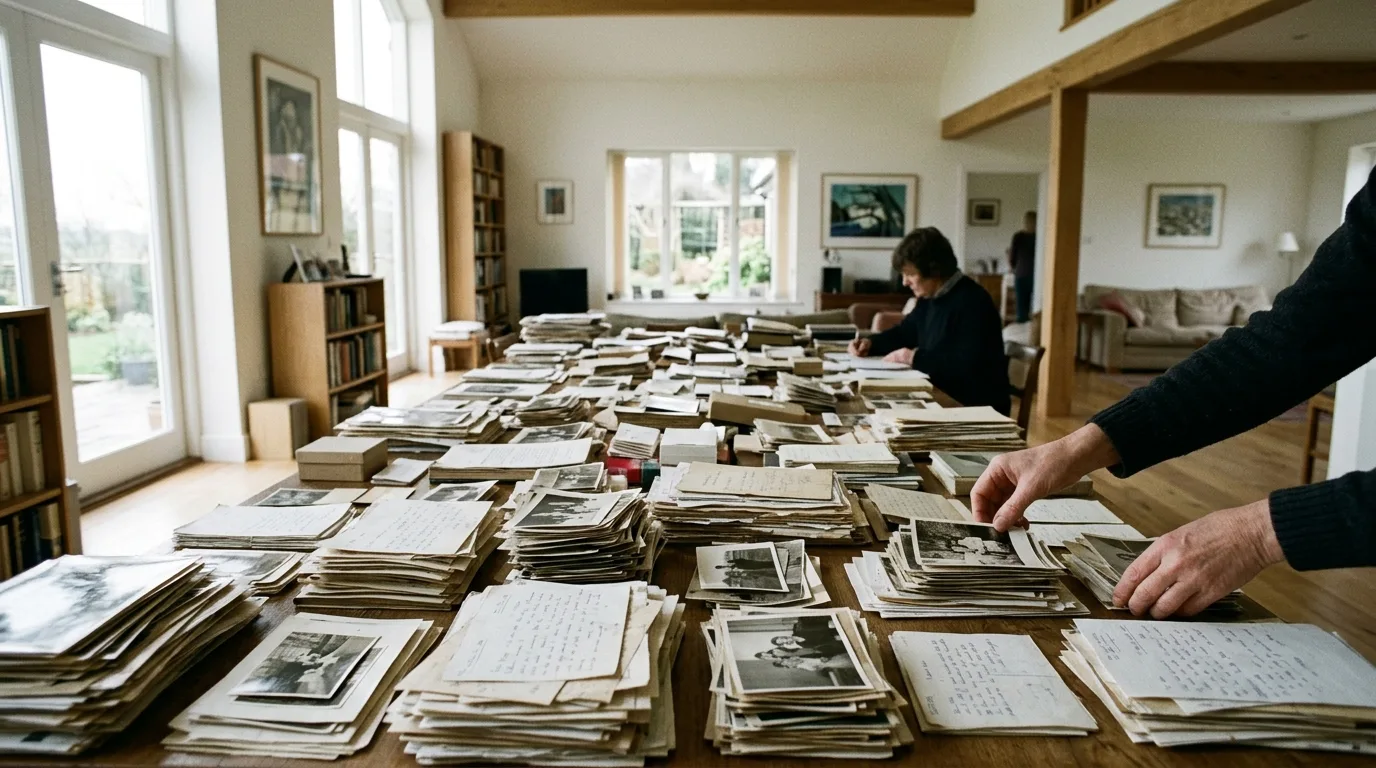
A relationship evidence packet has to do something a camera roll never does on its own: make a case, in order, with dates attached. Most couples end up either dumping a folder of JPEGs into an email, or spending a weekend in a spreadsheet trying to remember which trip was which year. Neither one reads like evidence. Organizing relationship evidence so somebody actually reads it comes down to the same three things every time: a clear timeline, a caption on every item, and a document structure the reviewing officer already recognizes.
Bona Fide was built around that structure instead of around the camera roll. It treats your photos and messages as raw material for a document, not as a gallery to scroll through.
What filing-ready actually means
A filing-ready packet isn't just photos in chronological order. It's a cover page, an index listing every exhibit by number, and then the exhibits themselves — each one dated, captioned and numbered to match the index. That's the format reviewers expect, and it's the difference between a submission that gets skimmed and one that gets read.
- A finished document, not a folder of photos
- Your photos, already in order
- Dates and places read automatically
- Photos with no date wait for you instead of being guessed
- Messages that read like evidence, not a chat log
- Every exhibit labelled and indexed
It does not decide what your relationship looks like. It decides what page it's on.
Dates and places, read not guessed
Import your photos and Bona Fide reads each one's embedded date and location and places it on a timeline automatically — no retyping captions, no renaming files. That's the part that saves the actual hours. But the more telling design choice is what happens when a photo has no date at all: it doesn't get a best guess or an estimated placement. It goes to a queue, separate from the timeline, until you confirm it yourself. A wrong date in an evidence packet is worse than a missing one, and Bona Fide is built around that asymmetry rather than around looking automatic at any cost.
Messages that read like evidence
A WhatsApp export of a real relationship can run to thousands of messages, and nobody reviewing a filing is going to read all of them, nor should they have to. Bona Fide imports the export and lets you pick the date ranges actually worth including — the month you met, the year you were apart, the weeks around the engagement — showing the page count for each range before you commit to it. Every range you choose becomes its own labelled exhibit, sitting in the packet alongside the photos, in the same date order. For more on picking ranges that hold up without filing three thousand pages, this guide on submitting WhatsApp messages as evidence walks through it.
Built for the agency, not just any binder
USCIS, UK Appendix FM and Canada IRCC filings don't share a format. Paper size, date style and category names all differ, and the Canadian template can render in English or French. Bona Fide's agency templates set those structural details for you; they don't touch what you choose to include or how you caption it.
- USCIS (marriage-based)
- US letter sizing, US date format, USCIS category naming
- UK Appendix FM
- A4 sizing, UK date format, Appendix FM category naming
- Canada IRCC
- A4 or letter, English or French, IRCC category naming
That's a formatting decision, not a legal one. Bona Fide organizes and lays out your evidence — it doesn't assess your case or predict an outcome, and nothing here should be read as legal advice.
One purchase, every packet after
Everything in Bona Fide happens on the iPhone itself. Photos, locations, chat exports and the rendered PDF are all read and built on-device — there's no account to create, nothing uploaded, no server in between. Settings › Delete all data removes every packet, exhibit and image immediately, which matters when the material in question is this personal.
You can build the whole packet, caption every exhibit and page through the finished document for free. The $24.99 purchase unlocks export — PDF, printing, Save to Files — for that packet and every one you build after, and Family Sharing means a couple only pays it once. If paperwork between two people is a familiar headache, the same instinct — handle it once, on-device, without an account — shows up in how we built FairShare for shared expenses.
Common questions
Does Bona Fide guess dates for photos without metadata?
Can I choose which WhatsApp messages to include?
Does my data leave my phone?
Is the export a one-time purchase or a subscription?
Does Bona Fide tell me if my filing will be approved?
This article was drafted with AI assistance and reviewed by a human editor before publishing.