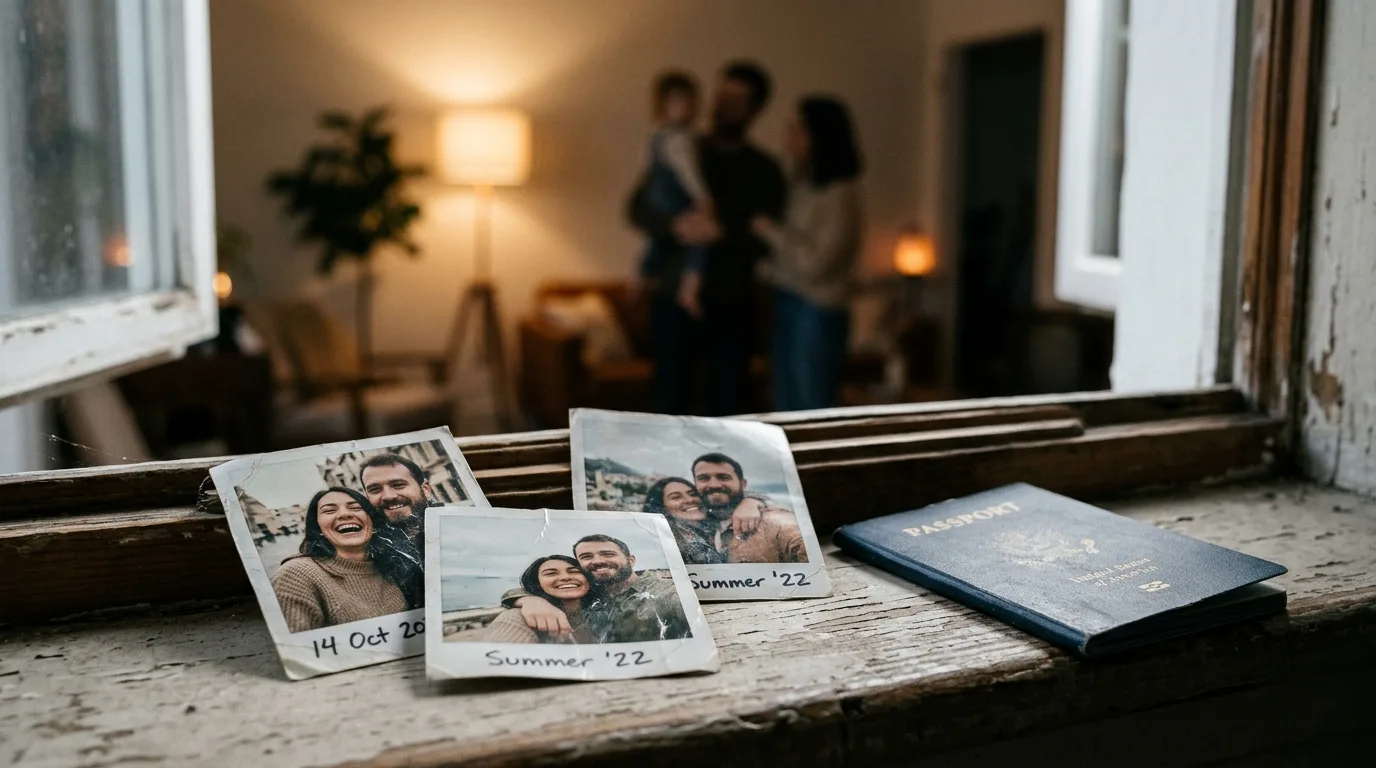
If you're about to file a spouse or partner visa and you're sitting on thousands of photos and a WhatsApp chat that goes back years, this page shows how Bona Fide turns them into one dated, numbered PDF a reviewer can read from first page to last without reshuffling anything. The app doesn't try to make your case sound better. It puts your photos and messages on a single visa relationship evidence timeline in date order, gives every item a number, a date and a caption, and builds the index that lets a stranger find exhibit 14 in seconds. Below is why each part works the way it does, and what it leaves to you.
Why does the order of your evidence matter so much?
Every system Bona Fide formats for asks the same thing in different words. Show us a real relationship, over time. In the US, couples are now being asked for stronger proof than before, including photographs over time, travel records, messages and pictures with family and friends, and inconsistent documentation is a common trigger for delays and Requests for Evidence. The reviewer guidance published by CLINIC lists photos of the couple together over time in different settings, and call logs or text history, especially for long-distance couples, among the things examiners weigh.
That phrase, "over time", keeps coming back. Immigration attorneys writing in 2026 describe RFEs being issued for documentary thinness rather than bad faith, and one defect they keep seeing is a photo file bunched around the wedding with very little from the years before or after. Most couples have plenty from those years. It just sits in a camera roll and never makes it into the file.
The UK and Canada add their own pressure. UK spouse visa applications are decided on what you upload. Caseworkers assess the documents in front of them, so a photo they can't place in your story is simply a photo. In Canada, consultants warn that a missing proof of cohabitation or an unclear relationship timeline can lead to an interview request or a request for more documents, which adds months to a process that is already slow.
And it is slow. Manifest Law's September 2026 figures put I-130 petitions for spouses of US citizens at 19 to 67 months. You hand the file over once, and then you wait. When someone finally opens it, they should be able to follow it.
A wedding album proves there was a wedding. A timeline proves there was a marriage.
What happens to a photo when you import it
In Bona Fide you pick photos from your library. For each one, the app reads the date and place saved inside the file and drops it onto the timeline where it belongs. You don't drag anything into order. The picture from the night you met lands before the one from your first trip together, which lands before the one from your partner's sister's wedding, whatever order you imported them in.
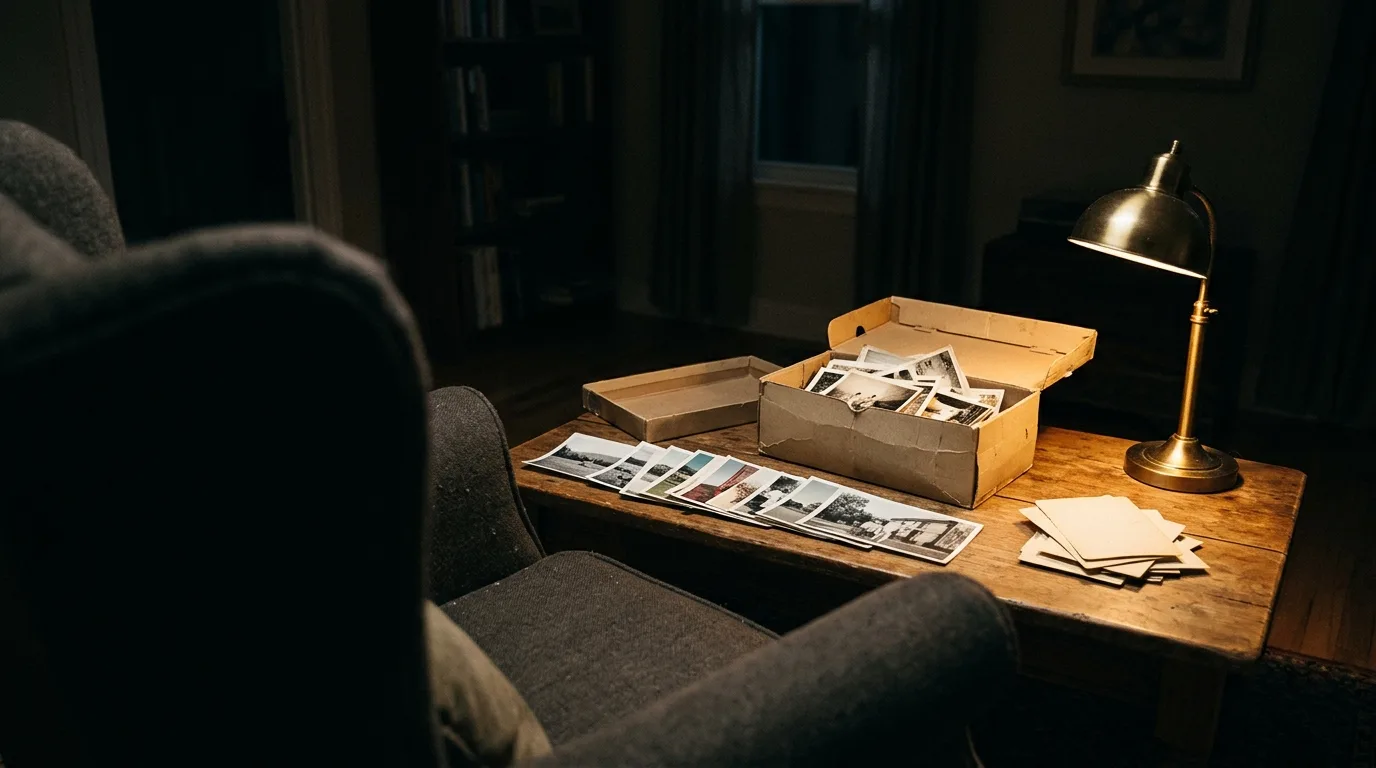
The decision we argued over longest was what to do with photos that carry no date. Scans of old prints often have none. Neither do many images someone sent you, or pictures that have passed through a few devices. Plenty of apps quietly fill the gap with whatever date they can find, often the day the file was copied or downloaded. In a camera roll that does little harm. In a legal document it puts your first holiday in the week you backed up your laptop, and an officer looking for consistency will notice.
So Bona Fide doesn't guess. Undated photos go into a queue and stay off the timeline until you date them. Open the queue and start with the prints that have something written on the back. Then do the ones you can tie to a trip or an event, like the birthday in the background or the city you only visited once. Whatever you still can't place, leave out. Every date in your packet ends up being one you can stand behind.
Then you caption: who is in it, where you were, what was happening. "Our first visit to Ana's parents, Porto" tells a reader far more than a filename does. With everything on one timeline, a thin stretch shows up while you build, long before an officer could spot it. If your timeline jumps from a 2022 beach trip straight to the wedding, you know which folder to go back through.
How a WhatsApp chat becomes a labelled exhibit
Messages are where long-distance couples hold most of their evidence, and they're the easiest way to bury a reader. A full export covering several years is far too long for anyone to read. Screenshots fix that and create a new problem: dozens of cropped images, half without a visible date.
Bona Fide works from your WhatsApp chat export and asks you to choose date ranges. The month you met. The year you lived in different countries. The weeks around the engagement. Each range becomes its own labelled exhibit, so the reader sees "Messages, March 2021: first month of contact" instead of one unbroken wall of text. Before you commit a range, the app shows how many pages it will add. Watch that number. If one range would fill most of the packet, cut it down to the weeks that matter.
Which ranges to include is your call. Our guide on submitting WhatsApp messages as relationship evidence without filing thousands of pages covers how to pick periods that show contact, plans and continuity.
What the finished packet looks like
When you export, you get one document, not a folder. It opens with a cover page, then an index of every exhibit, then the evidence in date order. Each exhibit carries its number, its date and your caption. Someone looking for the trip to meet your parents finds it in the index, turns to the exhibit and sees the date printed beside it.

Careful practitioners already build files this way. One US immigration practice describes heading off RFEs with a one-page evidence index that maps each requirement to a numbered exhibit. Bona Fide produces the index and the numbering. Matching exhibits to the specific requirements of your case is still up to you, or your lawyer.
You choose a template: USCIS marriage-based, UK Appendix FM, or Canada IRCC. The template sets the paper size, the date style and the category names, and on the Canadian template, whether the document reads in English or French. It doesn't change what you include. For a step-by-step walk from camera roll to PDF, see how photos and WhatsApp messages become one dated, labelled PDF packet.
Building and previewing are free, so you can page through the finished PDF from cover to last exhibit before paying anything. If the layout doesn't suit your filing, you've lost nothing finding out.
Why everything stays on your iPhone
A relationship evidence packet holds some of the most private material you own: your partner's messages, the location of your home, photos of relatives who never agreed to be in a government file. We didn't want any of it on our servers, so we don't have servers for it. Bona Fide reads your photos, locations and chat exports and builds the PDF on your iPhone. There is no account and no upload.
When the filing is done, Settings › Delete all data removes every packet, exhibit and image immediately. Nothing remains on our side to request or delete, because nothing was ever sent.
The trade-off is real, and you should know it before you start. With no account there's nothing to sync, so the packet lives on the iPhone you build it on. Pick one phone, usually the one with the bigger photo library, and AirDrop the other partner's photos onto it before you import. Family Sharing is on, so both of you can have the app on one purchase, but plan for one person to do the assembling.
Where Bona Fide stops
Bona Fide organizes and formats documents. It doesn't give legal advice, won't tell you whether your evidence is enough, and can't tell you whether a filing will be approved. A well-ordered packet makes your evidence easier to read. It doesn't change what the evidence shows.
It also works only with your photos and WhatsApp messages, and officers weigh much more than that. Canadian guidance points to proof of cohabitation and joint finances, and UK applicants have a financial requirement to meet, with the minimum income for sponsoring a partner still £29,000 as of 2026. Leases, bank statements, payslips and forms don't go through Bona Fide. You gather those separately.
If a lawyer is assembling your whole filing, ask them one question before you start: do they want the raw files or a formatted PDF? Some will be glad of an ordered, captioned set. Others have their own system. If you're putting it together yourselves, our resource on organizing relationship evidence so somebody actually reads it covers the parts the app doesn't touch.
On cost: building, captioning and previewing are free. A single $24.99 purchase turns on PDF export, printing and Save to Files for this packet and every packet after it. It is not a subscription.
Tonight, import only the photos from the month you met. Watch where they land on the timeline, clear whatever ends up in the undated queue, and you'll know within ten minutes whether this way of working suits the two of you.
Common questions
What does Bona Fide do with photos that have no date?
Does Bona Fide upload my photos and messages?
Can I use a WhatsApp chat as visa relationship evidence in Bona Fide?
Will Bona Fide make my relationship case stronger?
Sources
- Updated Evidence & Documentation Rules for Marriage Green Cards in 2025
- Ten Red Flags of a Sham Marriage
- Marriage-Based Green Cards: What Evidence Do You Really Need? (2026 Guide)
- How to apply for a UK spouse or partner visa
- How Long Does Spousal Sponsorship Take in Canada in 2026?
- I-130 Processing Times in September 2026: Spouse, Parents & Siblings
- Proof of Real Marriage Immigration in 2026: My Approach
- UK Spouse Visa Income Requirement 2026: Is It Still £29,000?
This article was drafted with AI assistance and reviewed by a human editor before publishing.